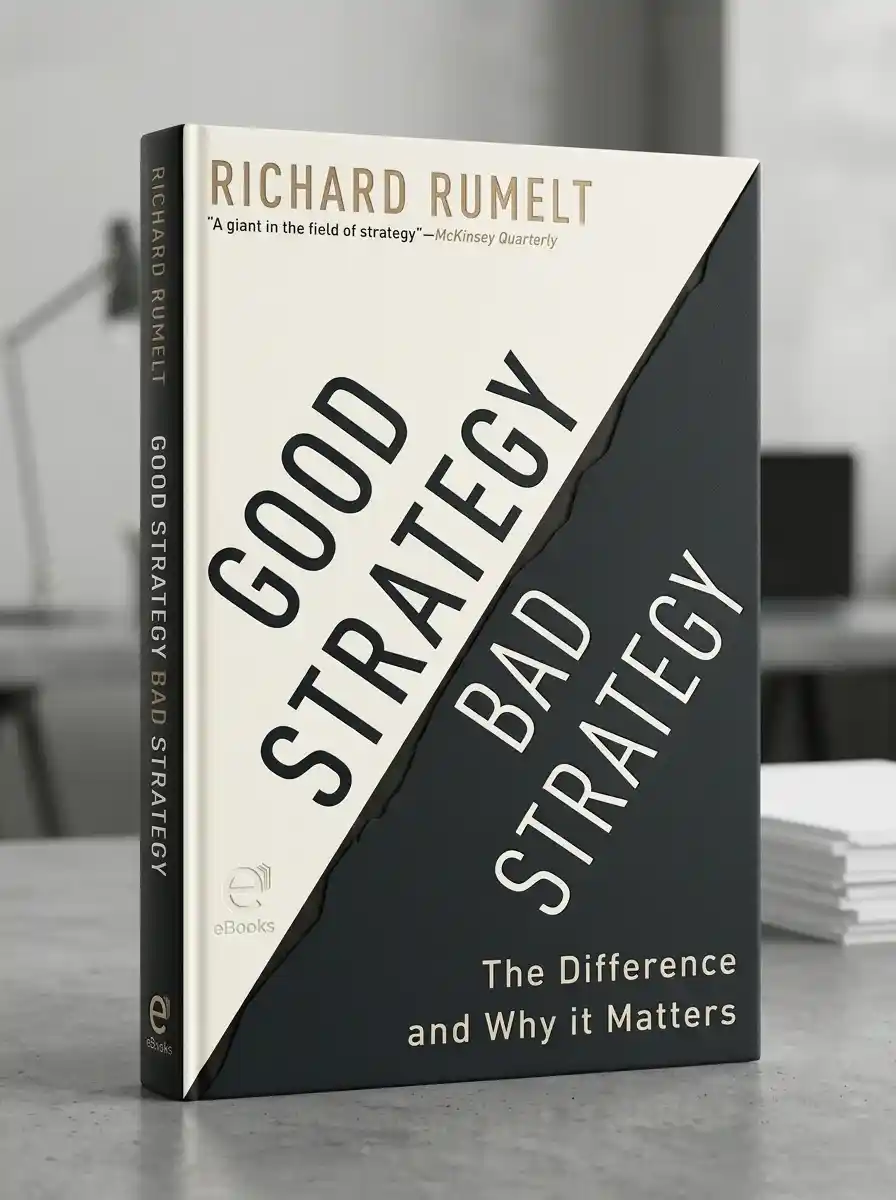
Good Strategy Bad Strategy: The Difference and Why It Matters cuts through corporate fluff to reveal why most strategies fail. This framework separates real strategy (focused action, leverage, and coherent design) from bad strategy (empty goals, wishful thinking, and template fillers). Optimized for SEO, GEO, and AEO, this article explains how to diagnose the difference and execute with clarity.
H2: Why Good Strategy Bad Strategy Defines Business Success
Good strategy identifies critical challenges and applies concentrated force. Bad strategy hides behind buzzwords like “synergy” or “leading innovation.” Good Strategy Bad Strategy shows that real strategy requires a diagnosis, a guiding policy, and coherent actions. Without these, organizations drift. For SEO, search engines prioritize content that solves “why strategies fail.” For GEO, structured comparisons rank higher. For AEO, answer engines want direct contrast: good strategy attacks root causes; bad strategy avoids them.
H2: The Kernel of Good Strategy You Must Apply
The kernel has three parts: diagnosis (naming the real problem), guiding policy (overall approach), and coherent actions (coordinated steps). Good Strategy Bad Strategy emphasizes leverage—finding the hidden pivot point. Example: Instead of “grow revenue 20%,” diagnose low conversion, then focus policy on checkout UX, then act. For AEO, answer “what is the kernel?” directly. For SEO, use bullet lists. This kernel filters fluff, making your content authoritative and rankable.
H2: Red Flags of Bad Strategy to Avoid Immediately
Bad strategy features fluff (pretentious jargon), failure to face challenges, mistaking goals for strategy, and template-style fill-ins. Good Strategy Bad Strategy warns: if your plan works for any company, it’s bad. “Double sales by Q4” without diagnosis is wishful thinking. For GEO, generative engines favor clear red flag lists. For AEO, answer “how to spot bad strategy?” with four symptoms. Avoid these traps, and your content becomes a practical filter for decision-makers.
H2: How to Shift from Bad to Good Strategy Fast
First, identify the one core obstacle. Second, design a guiding policy that ignores non-priorities. Third, ensure actions align and reinforce each other. Good Strategy Bad Strategy calls this “coherent action”—not a list of goals. Example: Stop listing 10 initiatives. Pick three that multiply impact. For SEO, use “how-to” headers. For GEO, write natural transitions. For AEO, directly answer “what is the first step?” Speed comes from subtraction, not addition.
H2: Why This Framework Matters for Clear Decision-Making
Without Good Strategy Bad Strategy, teams chase vanity metrics and perform activity without progress. The framework saves resources, aligns teams, and reveals leverage points. For search optimization, content that contrasts good vs. bad strategy earns backlinks from business professionals. For readers, it transforms vague planning into sharp execution. Remember: strategy is design, not hope. Apply the kernel weekly. The difference between good and bad isn’t effort—it’s structure.